Telemetry Pipeline Insights & Observability Best Practices
Gathering logs from Google Autopilot
In any modern containerized workload setting, container orchestration is imperative. Purportedly, the majority of contemporary applications make use of containers and micro-service-based architectures. Google designed Kubernetes to tackle the problem across the board. They pioneered by introducing the Google Cloud Platform for hosting containers. However, if you keep up with the cloud world, you’ll know … Read more
OpenTelemetry Compatible Distributed Tracing
Distributed tracing has been recognized as an imperative feature in the DevOps toolbox for microservices over the last few years. Consequently, the open source observability community came together in April 2019 to create a new project called OpenTelemetry by combining the energies that had previously been split between OpenTracing which is termed as a vendor-agnostic … Read more
Get the Most out of Video Streaming with Apica
Who doesn’t love sitting down to binge the latest great show? And with streaming services increasing all the time, more and more providers are embracing technologies that allow them to provide video content through browsers and a variety of dedicated apps. There are a few key streaming formats that support most streaming content. HLS is … Read more
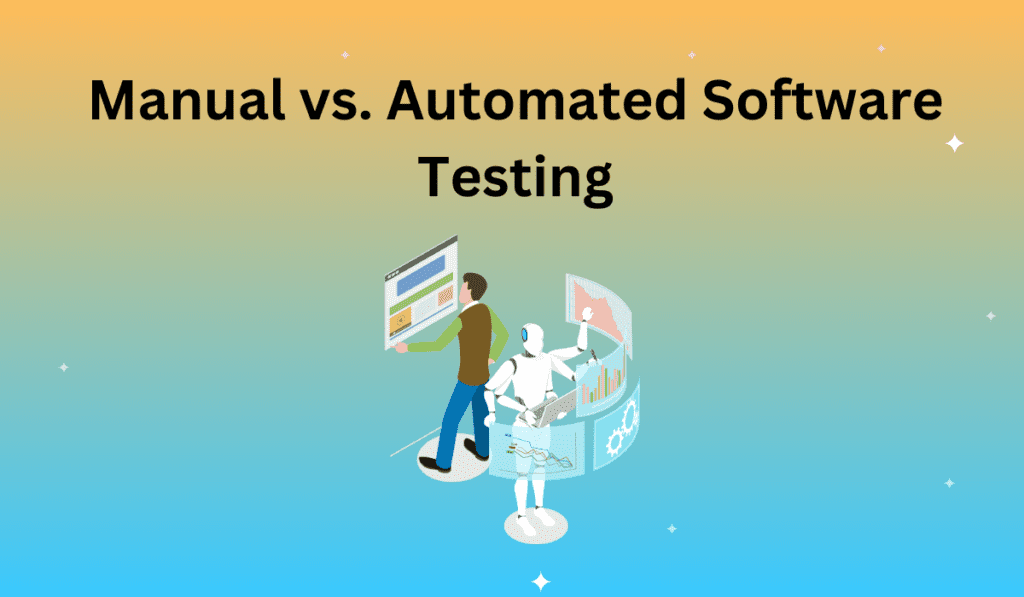
Manual vs. Automated Software Testing
Software testing is a huge domain, but it can be broadly categorized into two areas: manual testing and automated testing. Both manual and automated testing offer benefits and disadvantages. It’s worth knowing the difference, and when to use one or the other for best results. In manual testing (as the name suggests), test cases are … Read more
Full Stack Observability: The Data Fabric Way
Full Stack Observability is a term you may have heard being tossed around in many conversations around observability or monitoring in general. But what does it mean? What is the Data Fabric way, and why does your business need it? Let’s explore. The goal of Full Stack Observability is to provide a holistic view of … Read more
Understanding Anomaly detection with time-series metrics
Observability data has three types: metrics, traces, and logs. Metrics are numerical values that represent some aspect of a system at a given point in time. Examples of metrics include CPU utilization, memory usage, and network traffic. Traces are a record of the steps taken by a request as it flows through a system. Traces … Read more
Are you stuck with alert fatigue in your observability stack?
If you’re using an observability stack, chances are you’re familiar with alerting. Alerts help users get notified when something interesting happens that they need to act on. Alerting comes with its challenges when too many alerts become a problem and not the solution. Is your team stuck with alert fatigue? It is a very real … Read more
10 Reasons Why You Need a Machine Data Fabric for Your Digital Transformation Journey
Businesses everywhere are going through digital transformation. This means that they are adapting their operations and strategies to better compete in the digital age. A key part of this transformation is better managing the large volumes of machine data generated every day. Machine data management can be complex, but with the help of a machine … Read more
Solve Your Application Performance Issues with Active Monitoring
With the constant increase in applications being used both inside an organization and by customers, it’s more important than ever to have a firm grasp on the performance of these applications. With this digital transformation, enterprises need to do their due diligence in performance testing complex modern applications at scale, from the user perspective, all … Read more
Safeguard IT with Service-Level Assurance
How Does Service-Level Assurance Safeguard IT? With the increasing reliance on workers who require remote access to the enterprise resources they need, companies have added additional authentication and authorization mechanisms to verify who these workers are and ensure they have the correct permissions. Supporting newly remote workers puts an additional strain on the Information Technology … Read more
Reaching New Heights with Desktop Application Monitoring
There comes a time when a company must reach beyond its current capabilities and the low-hanging fruit, to reach more elusive customers. This is a perfect time to be creative and innovative – not only to expand the pool of customers but also to deliver greater capabilities to your existing customers. This was the case … Read more
Prometheus, logs and root cause analysis
Prometheus is a wildly deployed open source monitoring system for time series metrics. For observability use cases, it is important to bring together logs and metrics for root cause analysis into a tightly integrated framework to help faster root cause. A Prometheus deployment is configured with scrape targets from which metrics are collected periodically. The … Read more