

Apica Fleet
Simply Manage Telemetry Collection Agents
Fleet simplifies data collection across hybrid environments by eliminating the operational overhead of managing distributed agents, using your existing observability tools to automatically adapt to changing environments.
Through a lightweight Agent Manager that functions as a sidecar utility, Fleet enables responsive, configuration-driven data collection without frequent maintenance—following an “install once, update infrequently” model. It supports highly flexible setups by working with a wide range of agents like Fluentd, Vector, and Prometheus, offering full OpenTelemetry compatibility and avoiding vendor lock-in.
With centralized management and uniform configuration, Fleet allows you to scale data collection based on business needs, reduce costs, and maintain a secure, efficient observability infrastructure.
Capabilities
- Responsive Data Collection: Automatically adapts to environment changes—collect more data when you need it and less when you don’t, optimizing costs based on real-time requirements
- Pre-existing Agent Support: Leverages your current observability investments by working with almost all existing agents through standard configuration files
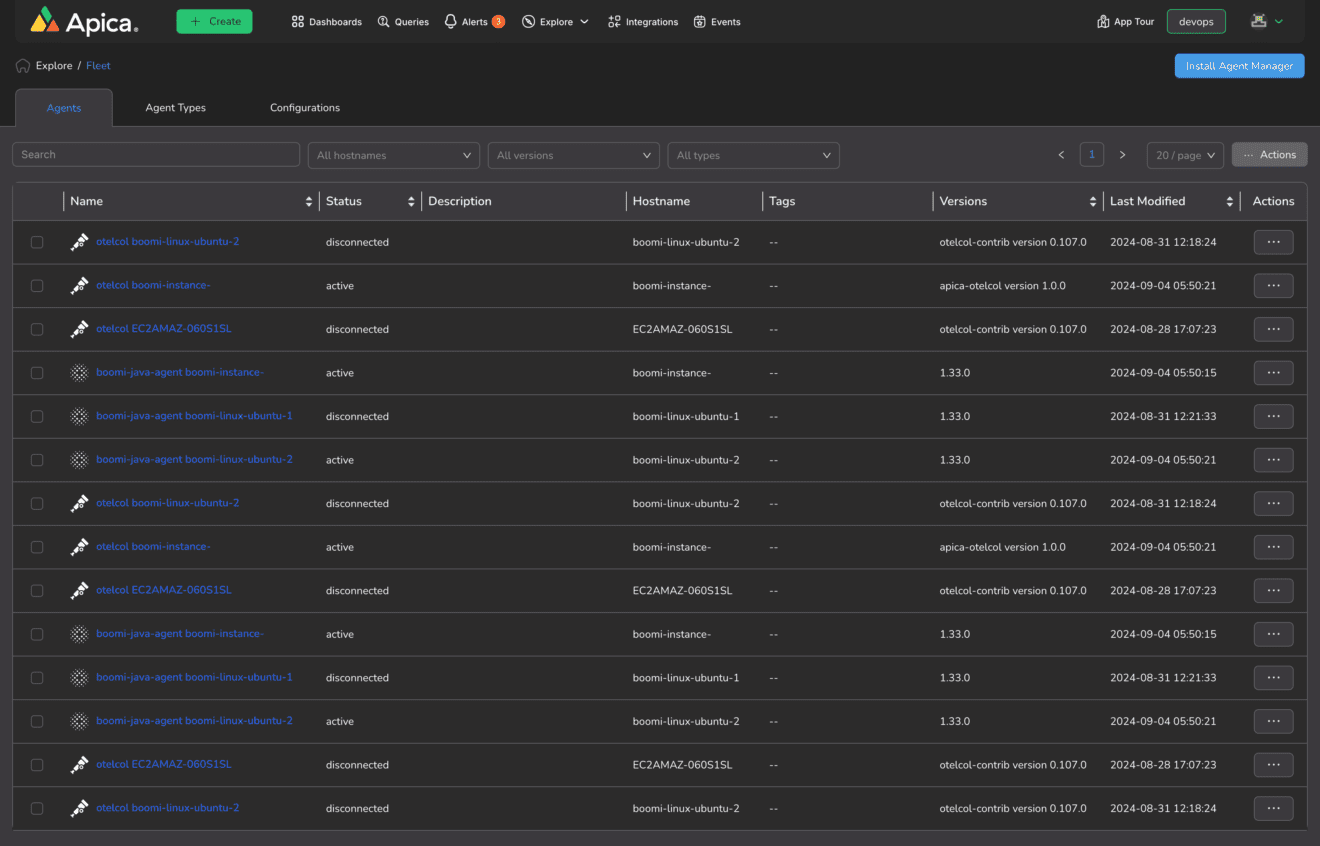
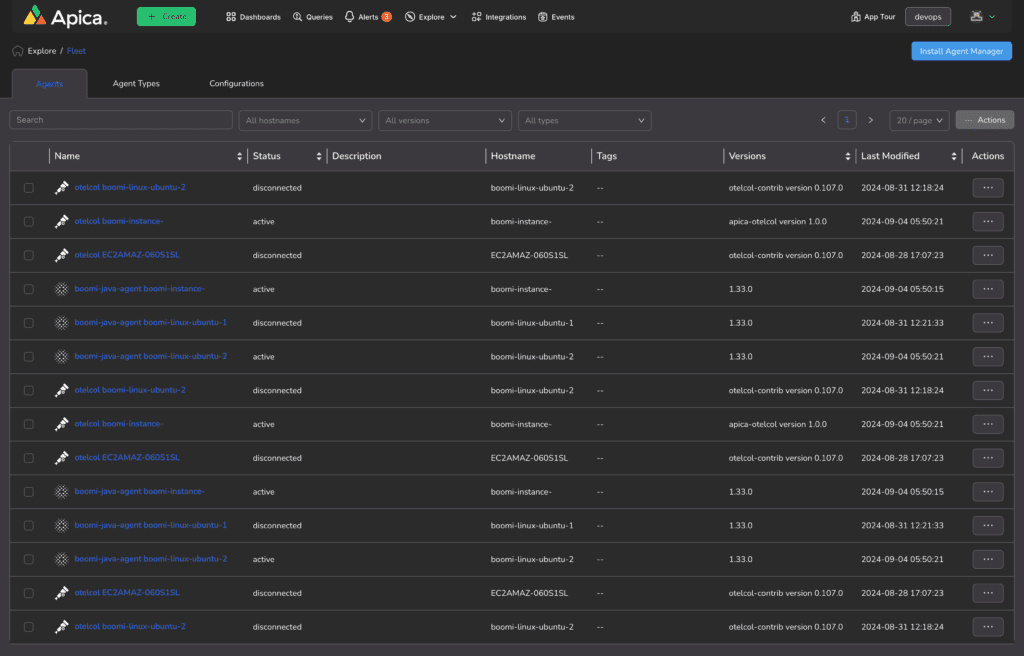
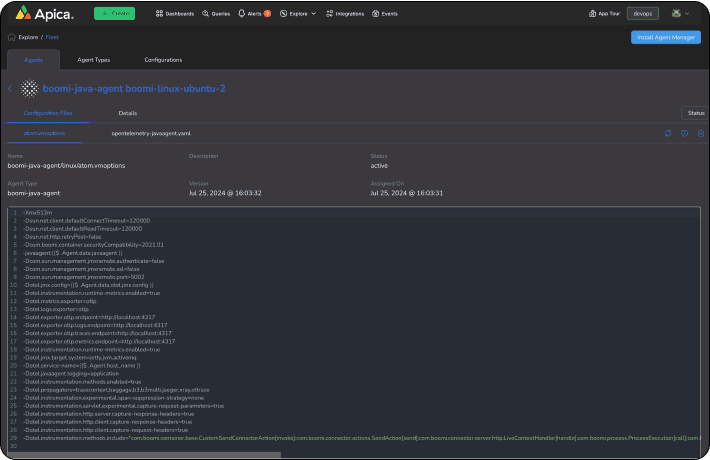
- Centralized Configuration Management: Manage any agent from one central location through an intuitive Fleet UI, eliminating manual maintenance of distributed data collectors across hybrid environments
- Install Once, Update Infrequently: Agent Manager functions as a lightweight sidecar utility that only needs installation once and infrequent updates, reducing operational overhead
- Multi-Agent Type Support: Works with major agent types including Fluentd, Vector, Prometheus, and custom agent capabilities—avoiding vendor lock-in with full OpenTelemetry support
- Seamless Integration with Open-Source Tools: Integrates with existing open-source observability tools to maintain flexibility and prevent proprietary platform dependencies
- Real-Time Agent Status Monitoring: Built-in status metrics (logiq_agent_liveness) provide visibility into agent health with Active, Disconnected, Inactive, and Error states
- Simplified Configuration Restart/Reload: Automatically checks for new configuration files and triggers appropriate restart/reload functionality for supported agents without manual intervention
Benefits
Reduce Operational Costs
Heterogeneous Agent Management
Seamless Integrations
Simplified Agent Maintenance
Consistent Configurations
Automated Discrepancy Management
Security Baked In
Future-Proof Your Architecture
FAQ
Frequently Asked Questions
Is Apica Fleet management compatible with existing telemetry agents?
Yes, Fleet leverages your current observability investments by working with almost all existing agents through standard configuration files. Multi-agent type support includes Fluentd, Vector, Prometheus, and custom agent capabilities with full OpenTelemetry (OTel) support.
Can Apica Fleet centrally manage agents across hybrid environments?
Absolutely, Fleet provides centralized configuration management to control any agent from one central location through an intuitive Fleet UI. This eliminates manual maintenance of distributed data collectors across complex hybrid environments.
What are the primary benefits of using Apica Fleet Management?
Fleet transforms traditional static telemetry into a dynamic, flexible system that automatically adapts to environment changes. It reduces operational costs while providing heterogeneous agent management with seamless integrations and simplified maintenance.
How does Apica Fleet reduce operational overhead for agent management?
The Agent Manager functions as a lightweight sidecar utility that only needs installation once and infrequent updates. Automated configuration restart/reload functionality eliminates manual intervention while providing real-time agent status monitoring.
How does Apica Fleet's pricing structure work for multi-agent deployments?
Fleet offers cost-optimized management by automatically collecting more data when needed and less when you don’t, optimizing costs based on real-time requirements. The responsive data collection approach prevents vendor lock-in while maintaining budget flexibility.